


48 Hours in Captivity: King-Elect Napoleon Egin Breaks His Silence on the Night He Was Abducted and the Phone Call He Says Was Meant to Make the Story Disappear
- by Okoba, Delta, RNG247
- about 1 months ago
- 540 views
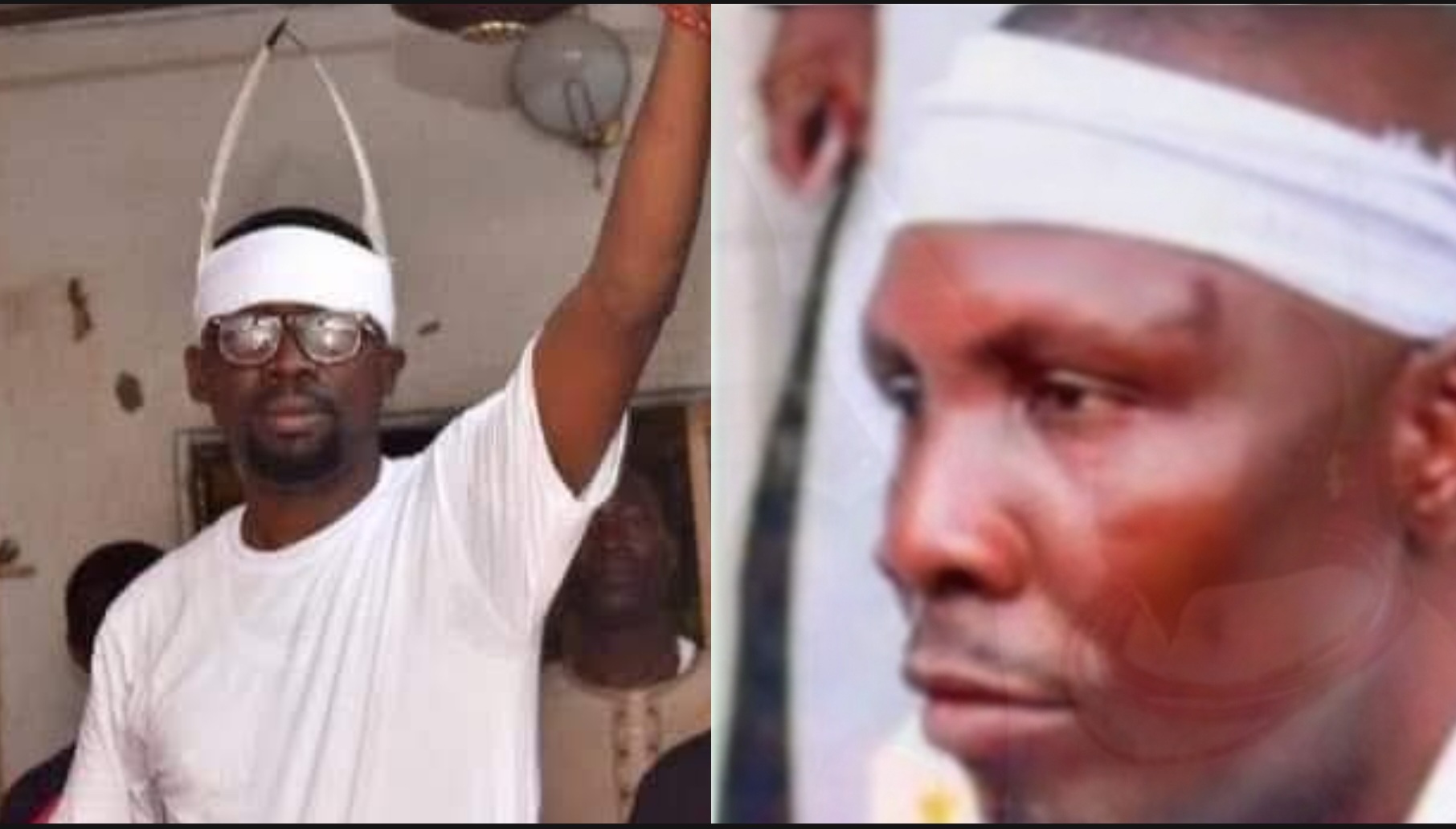
For 48 hours, he says, he was held without food or water. His captors allegedly moved him through the waterways, confined him at a remote camp, and eventually placed him before a camera to deny that he had been kidnapped.
Now, King-Elect Napoleon Sekegbekumor Egin is breaking his silence, recounting what he describes as a carefully orchestrated attempt to derail his emergence as the traditional ruler of the Egbema Kingdom—and revealing a phone call involving Mr. Government Ekpemupolo, popularly known as Tompolo, which he says was central to efforts to contain the fallout.
But according to Egin, the story cannot be understood simply as an alleged kidnapping. At its heart, he says, is a decades-old struggle over who controls the traditional institution and ancestral stool of Egbema.
He alleges that for years, Tompolo had sought to influence the affairs of the Egbema traditional institution. Egin points to the previous monarch, His Royal Majesty King Tiemo, as an earlier example of what he describes as interference. According to Egin, Tompolo fought against King Tiemo and allegedly used government connections and influence during the military transition era to frustrate the monarch.
Despite those alleged efforts, King Tiemo eventually received his official staff of office and remained on the throne until his death in 2020, having reigned into his nineties.
Egin claims that following the monarch's death, Tompolo publicly expressed his intention to install his preferred candidate. For two years, the Egbema throne remained vacant.
Then came October 18, 2022, according to Egin, the recognized kingmakers of the Egbema Kingdom gathered at Ofunama to determine who would occupy the vacant throne. He says the gathering included the Toripuwei, Perecoriwei, Fufuwei, the oldest man in the kingdom, and senior elders from his ruling house.
He maintains that the decision was unanimous and voluntary, that day, he says, the kingmakers proclaimed him, Napoleon Sekegbekumor Egin, King-Elect of Egbema Kingdom.
But what followed, according to his account, transformed a traditional selection into a dangerous confrontation.
At approximately 9:30 p.m. that same night, Egin alleges that heavily armed men stormed the royal palace at Ogbudugbudu where he was staying.
He says the men broke into the building and subjected elderly men present at the palace to violence, beating and pushing them to the ground. He identifies the alleged attackers as Tompolo's Tantita boys.
Egin says he was then dragged from the palace to the riverbank and forced into a speedboat.
According to his account, the boat was operated by personnel associated with Tantita Security Services. He specifically names individuals he says were involved, including Super Ebilade, Ebipade Kari and Ekomieyefa Uduboh, alongside others.
The journey took them through the waterways to a remote location known as Sunny Island.
It was there, Egin alleges, that the threats became unmistakable, he says his captors told him that had he not been a native son of the soil, he would not have left the camp alive.
While he was allegedly being held, word of his disappearance began spreading.
Egin credits journalist Austin Ozobo with breaking the news online that the King-Elect had been kidnapped, saying Ozobo was among those who covered the incident.
But according to Egin, attempts were subsequently made to suppress the story. He specifically points to rival media platforms, including Gbaramatu Voice, as having attempted to drown out or minimize the reports.
Behind the scenes, he says, the situation was becoming even more serious.
Egin alleges that he remained at the camp for two days without food or water while his captors communicated by telephone with Government Ekpemupolo over how to handle the growing public outcry.
Then came what he describes as the most revealing part of the entire episode.
According to Egin, before he was eventually handed over to authorities, his captors set up a camera and forced him to deliver a scripted statement denying that he had been kidnapped.
Surrounded by armed men, Egin maintains that he read the statement because he feared for his life. He argues that anything he said under such extreme duress could not reasonably be treated as a voluntary declaration.
Yet, in what he describes as an extraordinary contradiction, Egin says that the same recording contained an admission by his captors that he had been kept at the camp for two days.
Eventually, he was handed over to the Department of State Services, or DSS.
Rather than allowing the matter to disappear, Egin says his legal team immediately filed a petition demanding a formal investigation into the alleged kidnapping.
According to him, however, the case quickly ran into political resistance.
He alleges that pressure was applied to recast the incident as nothing more than an "internal chieftaincy dispute," after which the DSS investigation was halted.
Unwilling to abandon the matter, Egin says he submitted another petition, this time to the Nigerian Police Anti-Kidnapping Squad.
The police, he says, initially responded by inviting some of the suspects for questioning.
But again, according to Egin, the process did not last, he alleges that intervention from the Oporoza House and political interests brought the investigation to a standstill.
Egin says the lead investigator eventually told him candidly that powerful political figures had ordered the investigation to stop.
For him, the alleged kidnapping was only one part of a much larger struggle.
He says political machinery was subsequently deployed to prevent his formal recognition as King-Elect.
According to Egin, the Directorate of Chieftaincy Affairs had directed him to complete the required medical examinations so that his file could be forwarded to the Governor. But he alleges that instructions emanating from the Deputy Governor's office subsequently stalled the process.
He says civil servants involved in processing his documents openly told him that political orders were preventing his file from moving forward.
Faced with what he describes as a system in which political influence had overwhelmed traditional and administrative processes, Egin says he turned to the courts of heaven.
He wrote a formal petition to the Governor and placed his faith in divine justice, insisting that he had committed no act of corruption, violence or illegality.
He also says that in the months that followed, several individuals whom he believed had actively participated in efforts against his emergence as king suddenly became seriously ill and died, while others remain confined to wheelchairs.
Egin does not present those events as something he personally caused. Rather, he describes them as developments he witnessed after placing the matter in God's hands.
Meanwhile, he says the threats against his own life became serious enough that he was eventually forced to relocate temporarily to the United Kingdom.
Yet even from abroad, he insists that he has not abandoned his claim, he maintains that his selection was conducted lawfully, transparently and voluntarily by the legitimate kingmakers of the Egbema Kingdom.
And then, according to Egin, came a development that brought the controversy back to Tompolo.
He says Tompolo recently summoned Egbema elders and admitted that he had played a role in preventing Egin from ascending the throne because he did not want him to become king.
Egin further claims that Tompolo told the elders he was prepared to give him whatever he wanted, including a political appointment, if he would abandon the matter.
But Egin says his response was unequivocal: he does not need anything from Tompolo.
For the King-Elect, the issue is no longer about personal benefits, political appointments or offers of settlement.
It is about the traditional stool.
It is about what he says happened on the night he was taken from Ogbudugbudu
It is about the 48 hours he says he spent without food or water.
It is about the alleged attempt to force him onto camera and make him deny his own abduction, It is about the investigations he says were stopped by political intervention.
And ultimately, it is about whether the decision of the Egbema kingmakers can stand above political influence.
Egin says intimidation may have delayed his recognition, political pressure may have stalled investigations, and exile may have become necessary for his safety, but none of those things, in his view, changes what happened.
His position remains that the Egbema kingmakers made their choice on October 18, 2022, and that those who allegedly abducted him, threatened him, interfered with investigations or unlawfully obstructed the traditional process must eventually answer for their actions.
For Egin, the throne may still be contested, but he insists the truth cannot be kidnapped.




1 Comment(s)
Why are local news outlets like Gbaramatu Voice allegedly suppressing stories of armed abductions? Media integrity matters!