


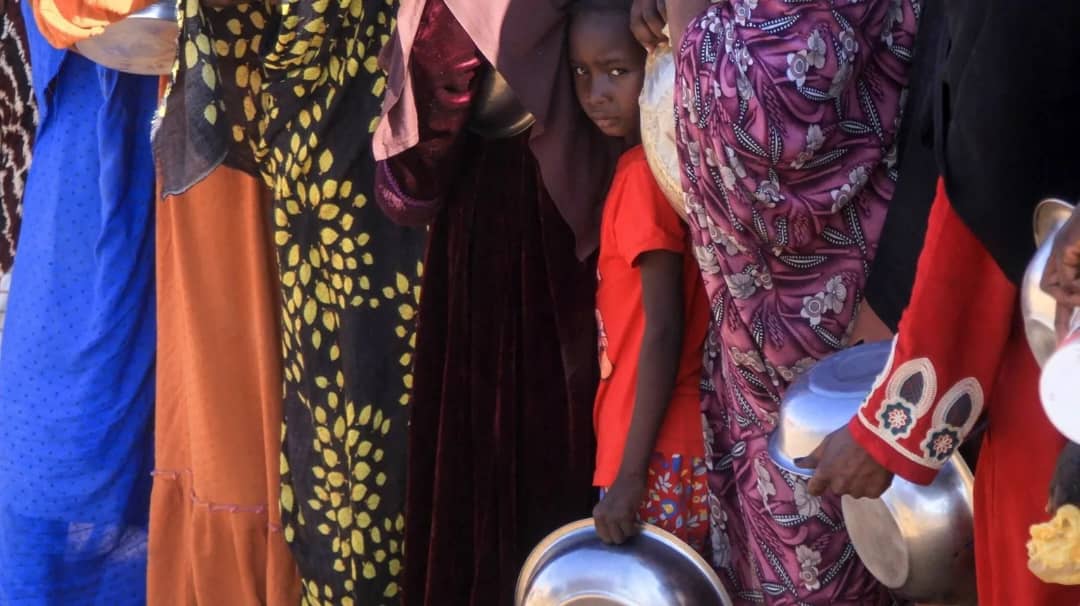
In a shocking revelation, a United Nations report has confirmed that over 6,000 individuals were brutally killed within a mere three-day span during the fall of el-Fasher to Sudan's paramilitary Rapid Support Forces (RSF). Eyewitness accounts and testimonies from victims have painted a graphic picture of the atrocities that unfolded last October in the city, which has been a significant battleground in Sudan’s enduring civil conflict.
"It was like a scene out of a horror movie," recounted one survivor, who witnessed the horrific events firsthand as RSF fighters indiscriminately opened fire on around 1,000 civilians sheltering in a local university. Bodies were reported to be thrown into the air, illustrating the chaotic and violent nature of the assault.
The UN's damning report details grave violations of human rights, including mass killings, summary executions, torture, abductions, and rampant sexual violence perpetrated against civilians. These acts constitute serious war crimes and may also be classified as crimes against humanity, according to the findings.
Despite the overwhelming evidence, the RSF has refrained from commenting on the report's findings, maintaining its previous stance of denial regarding accusations of human rights violations.
The turmoil in Sudan has its roots buried deep in a power struggle that has persisted for nearly three years between the RSF and the regular army. This civil war has wrought unimaginable destruction over the past months, resulting in the deaths of hundreds of thousands and forcing over 13 million people to flee their homes. A particularly disturbing element of this conflict has been the systematic use of sexual violence as a weapon—targeting men, women, and children alike.
Both the RSF and Sudanese Armed Forces have faced widespread condemnation for their involvement in these atrocities. Human Rights Watch, along with US authorities, has accused the RSF and its allies of committing genocide against the Massalit people and other non-Arab ethnic groups in the Darfur region. However, recent UN reports have so far refrained from labeling the situation definitively as genocide.
El-Fasher, strategically located in Darfur, has endured an 18-month-long siege, during which some of the most harrowing accounts of violence and suffering have surfaced. The recent UN report draws on testimonies from more than 140 victims and witnesses, gathered both in Sudan's Northern State and neighboring eastern Chad in late 2025.
According to the UN, during the initial onslaught on el-Fasher, "at least 4,400 people were killed" in the city alone, with an additional "over 1,600 others perishing along the escape routes." The report emphasizes that the true scope of the death toll is likely to be "significantly higher."
Volker Türk, the UN Human Rights Chief, has reiterated calls for all parties involved in the conflict to cease the egregious violations enacted under their command and uphold international human rights standards.
The international community's pressure mounts on the conflict's backers to withdraw their support. The United Arab Emirates (UAE), frequently accused of being a primary arms supplier to RSF fighters, has denied such claims vehemently.
Moreover, the UK recently escalated its response by imposing sanctions on six influential figures thought to be exacerbating Sudan's conflict. Among those targeted are high-ranking commanders from both the Sudanese Armed Forces and the RSF, as well as three foreign nationals linked to the recruitment of Colombian mercenaries for the RSF's cause.
In the face of increasing scrutiny, UK Foreign Secretary Yvette Cooper responded to allegations that arms sold legally to the UAE may have been diverted to the RSF, assuring that the UK maintains rigorous controls on arms exports to prevent such a diversion from occurring.
In a surprising political development, a coalition associated with the RSF has announced plans to form a rival government in western Sudan, identifying itself as the Sudan Founding Alliance. The African Union has denounced this initiative, arguing that it poses a serious threat to any prospects for national unity in a nation already fractured by violence and strife.







0 Comment(s)